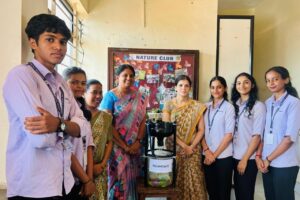
The Department of Zoology conducted an experiential learning on preparation of vermi-compost using biodegradable waste materials collected from the college botanical garden. The activity was conducted over a period of 45 days, from March 13, 2026, to April 27, 2026, with the active participation of 4 students from II BZC.
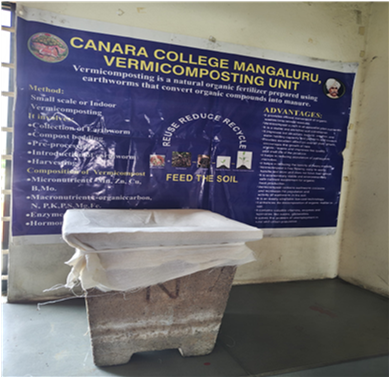
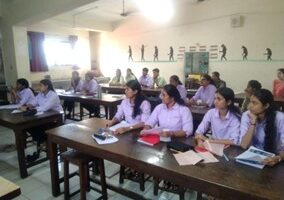
Before the preparation of vermi-compost, students were introduced to the concept, scope, importance, and method of vermi-composting. They also learned about the role of earthworms in the decomposition of organic waste and in improving soil fertility.
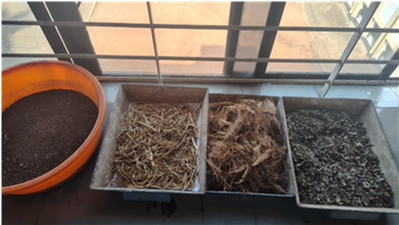
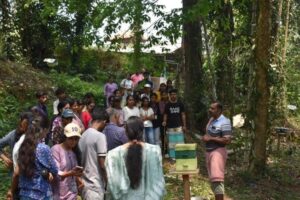
The students visited the college botanical garden to collect biodegradable waste materials such as dry leaves, paper waste, and other organic matter. Earthworms required for the composting process were also collected.
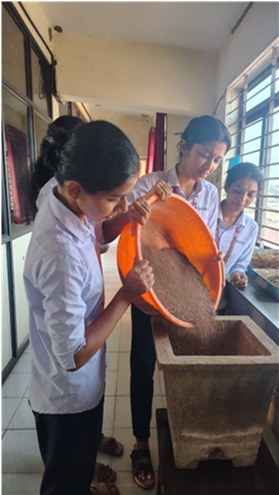
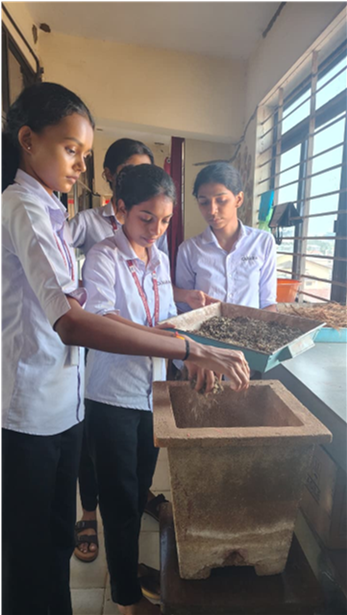
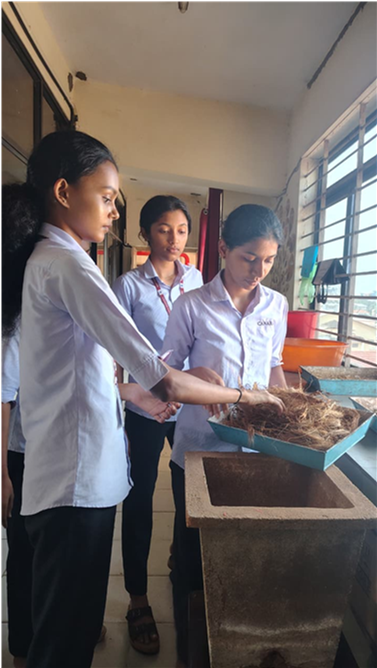
On the second day of the activity, students shredded the collected waste materials to facilitate faster decomposition. Subsequently, the vermi-composting unit was prepared in a mud pot. A vermi-bed was first arranged using coconut fibre, followed by the layering of biodegradable waste materials. Cow dung slurry was then added to enhance microbial activity, and earthworms were carefully introduced into the setup.
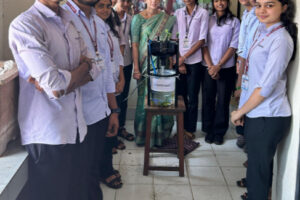
The vermi-composting unit was regularly maintained by mixing the contents twice a week to ensure proper aeration, moisture retention, and uniform decomposition. The students actively monitored the composting process throughout the activity period.
After 45 days, nutrient-rich vermi-compost was successfully produced. The prepared compost was dark, granular, and odor-free, indicating successful decomposition and compost maturity.
The activity provided students with practical exposure to sustainable waste management practices and demonstrated an eco-friendly method for converting organic waste into valuable manure.
Report by,
Mrs. Sushama C.
Mrs Pushpanjali S.